
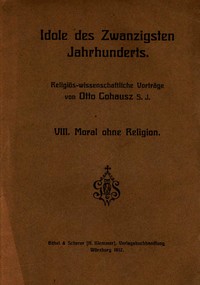
Idole des Zwanzigsten Jahrhunderts. VIII. Moral ohne Religion by Otto Cohausz
So, I picked up this book from 1912 called Idole des Zwanzigsten Jahrhunderts. VIII. Moral ohne Religion (Idols of the Twentieth Century. VIII. Morality without Religion). It's part of a series where a Catholic priest, Otto Cohausz, examines the big ideas he saw shaping the new century. This volume tackles one of the biggest: the idea that society can build a strong moral code without relying on religion.
The Story
There's no plot in the traditional sense. Instead, Cohausz lays out an argument. He looks at the 'idol' of a religion-free morality, explaining why the concept was gaining traction and what its supporters believed. He doesn't just dismiss it. He seriously considers the challenge it poses to religious teaching. The book is his attempt to engage with this modern idea from his perspective as a believer, questioning if and how faith still fits into the picture of a good life.
Why You Should Read It
It's a time capsule of a huge intellectual debate. Reading it, you get a front-row seat to the anxieties and hopes of a world on the brink of massive change. What struck me was Cohausz's tone. He's not shouting from a pulpit; he's trying to have a reasoned discussion with the modern world. It makes you think about how we define 'good' and 'right' even now. The questions haven't gone away.
Final Verdict
Perfect for anyone interested in the history of ideas, ethics, or early 20th-century thought. It's short, direct, and offers a unique viewpoint—a religious insider thoughtfully confronting secularism. It's not light bedtime reading, but it's a compelling piece of intellectual history that feels surprisingly personal.
This book is widely considered to be in the public domain. Distribute this work to help spread literacy.
Paul Hernandez
1 year agoText is crisp, making it easy to focus.






Mary Harris
1 year agoWithout a doubt, the depth of research presented here is truly commendable. Worth every second.