
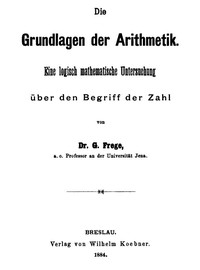
Die Grundlagen der Arithmetik by Gottlob Frege
Okay, let's set the scene. It's the late 1800s, and Gottlob Frege, a German logician, is fed up. He thinks math is built on shaky ground. Everyone just assumes we know what numbers are because we can point to two apples. But Frege asks: what is 'two' itself, separate from any apples or coins?
The Story
Frege's mission is to define numbers using only logic. He starts with the concept of a 'set' or collection of things. The number 'zero,' for example, is defined as the set of all things that are not identical to themselves (a clever, empty set). From there, he builds up, defining 'one,' 'two,' and so on, using logical rules. He's constructing an entire castle of arithmetic from the ground up, brick by logical brick. The plot twist arrives years later when Bertrand Russell writes to him, pointing out a fatal flaw in the foundation: a paradox about sets that contain themselves. This 'Russell's Paradox' showed Frege's beautiful system could lead to a logical contradiction, undermining his whole project.
Why You Should Read It
You should read it because it's a raw, intellectual drama. You're watching a genius at work, building something monumental, only to see him acknowledge its failure in a heartbreaking appendix. It's not dry philosophy; it's about the passion and risk of big ideas. Frege's writing is sharp and clear, and even when his system fails, the questions he asks are profound. What *are* abstract objects? How much of our knowledge is truly rock-solid?
Final Verdict
Perfect for anyone who loves big ideas, history of science, or stories about brilliant failures that change everything. It's heavy going in places—this is serious logic—but incredibly rewarding. If you've ever enjoyed a 'mind-bending' concept in sci-fi or wondered about the bedrock of reality, this is the real-world, foundational text where that kind of thinking gets its start.
This text is dedicated to the public domain. Preserving history for future generations.
Deborah Flores
1 month agoWithout a doubt, the narrative structure is incredibly compelling. Absolutely essential reading.
Thomas Robinson
1 year agoUsed this for my thesis, incredibly useful.
Elijah Brown
1 year agoI was skeptical at first, but the pacing is just right, keeping you engaged. This story will stay with me.
Mason Perez
5 months agoSimply put, the pacing is just right, keeping you engaged. Definitely a 5-star read.
Linda Anderson
1 year agoI came across this while browsing and the character development leaves a lasting impact. Worth every second.