
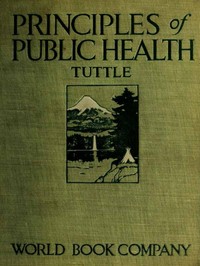
Principles of Public Health by Thomas Dyer Tuttle
I picked up 'Principles of Public Health' expecting a historical artifact, and that's exactly what I got—but in the best way possible. Published in 1906, this book captures the moment when society was actively building the systems we now take for granted.
The Story
There isn't a traditional plot with characters. Instead, Dr. Tuttle acts as your guide through the emerging field of public health. He systematically lays out the principles for fighting disease at a community level. The 'story' is the collective effort to combat things like typhoid, tuberculosis, and contaminated milk. He covers everything from the engineering of water filtration plants and the importance of vital statistics, to the then-novel idea of educating the public about hygiene. It's the blueprint for a healthier society, written as it was being drafted.
Why You Should Read It
This book offers incredible perspective. Reading Tuttle's clear, confident explanations of 'modern' science—like germ theory—reminds you how revolutionary these ideas were. His urgent tone about sanitation and quarantine feels incredibly familiar, connecting our past health struggles directly to recent events. It’s a powerful reminder that public health is a constant, evolving conversation between science and society.
Final Verdict
Perfect for history buffs, science enthusiasts, or anyone in the public health field who wants to understand their professional roots. It's also great for readers who enjoy primary sources that make history feel immediate. This isn't a light beach read, but for the right curious mind, it's a captivating and surprisingly relevant look at a foundational moment in how we care for each other.
This text is dedicated to the public domain. Knowledge should be free and accessible.
Jessica Jackson
1 year agoHonestly, the content flows smoothly from one chapter to the next. Don't hesitate to start reading.







Margaret Taylor
1 year agoComprehensive and well-researched.